





Hostile Work Environment: How to Identify it and What to Do About it
What is a Hostile Work Environment?
A hostile work environment occurs when offensive behavior (words or actions) from a supervisor or peer severely impact other employees, causing discomfort, fear, and disruption to their work and well-being.
It’s common to feel stress at work for a number of reasons. However, if you find yourself dreading work because of how your boss or colleagues treat you and others, it may be an indication that something is wrong. You could be working in a hostile work environment.
But what exactly does a hostile work environment mean? What are the conditions that create such an environment? In many cases, it could mean that company employees are violating federal laws that are in place to protect their colleagues from such situations.
If you realize that you are in a hostile workplace or a victim of hostile environment harassment, it is crucial to take action promptly. However, before you do so, it is important to have a clear understanding of what constitutes a hostile work environment in order to determine whether you are indeed in one.

Types of Hostile Work Environments
There are many different types of Hostile work environments, some of the most obvious signs include:

If you need help...
If you’re experiencing a hostile work environment, we hope you’ll find this page of frequently asked questions a helpful resource to help you get answers about how to identify it and what to do about it.
However, please understand that – regardless of how thorough and helpful it is – no website can replicate the help and support you receive from talking to an attorney about your specific circumstances to get individualized advice on what to do.
Click here if you wish to contact our experienced and caring legal team now.
If you are experiencing a hostile work environment, you are not imagining it. And you are not alone.
You do not have to tolerate inappropriate behavior or a hostile workplace.
But you DO have to document it so you can prove it.
And we can help.
WORKPLACE HARASSMENT
What Is Workplace Harassment?
Workplace harassment includes any unwelcome behavior, comments, or actions that create a work environment that would be hostile, intimidating, or offensive to reasonable people. It can encompass various forms of mistreatment, such as verbal, physical, or psychological abuse, and it may be based on factors like gender, race, religion, disability, age, or other protected characteristics.

It’s important to note the following when identifying workplace harassment:
- The person responsible for the harassment can be the victim’s direct supervisor, a supervisor in another area, a co-worker, or a non-employee.
- The victim does not have to be the person directly subjected to the unwelcome behavior, comments, or actions … it can be anyone affected by the offensive conduct.
- Unlawful workplace harassment may take place even without economic consequences or injury to the victim.
What are different types of workplace harassment?
Workplace harassment can manifest in many different forms, including but not limited to:
- Offensive Objects Or Pictures
- Sexual harassment
- Quid-Pro-Quo Harassment
- Racial harassment and discrimination
- Hostile Work Environment
- Bullying
- Cyberbullying
- Physical Assault Or Threats
- Verbal Abuse, Such As:
- Nicknames Or Name Calling
- Offensive Jokes
- Slurs
- Insults
- Inappropriate Questions And Conversations
- Interference With Work Performance
It's important to recognize that any behavior that makes you feel uncomfortable or threatened could potentially qualify as harassment.
Are there any resources available for individuals who have experienced sexual harassment in a hostile work environment?
Yes! There are numerous resources available for victims of sexual harassment. For example, you can contact your employer’s human resources department, seek legal counsel, and/or connect with support groups and organizations specializing in workplace sexual harassment.
The National Sexual Violence Resource Center maintains an online directory of organizations that you can go to for assistance. (Click here to search the directory.)
And if you or someone you know is the victim of sexual harassment or assault, you also can call the National Sexual Assault Hotline at 1-800-656-HOPE (1-800-656-4673) or chat online at online.rainn.org.
What are the sexual harassment laws in California?
California must to adhere to federal laws against sexual harassment as defined in Title VII of the Civil Rights Act of 1964. California’s Fair Employment and Housing Act (FEHA) also applies to all California employers, labor organizations, and employment agencies. In California, sexual harassment can refer to any or all of the following:
- unwelcome sexual advances
- visual, verbal, or physical conduct of a sexual nature
- actions that create an intimidating, hostile, or offensive work environment based on an employee’s sex or gender
Is Quid-Pro-Quo considered harassment?
Quid-Pro-Quo (“this for that”) is often the most blatant type of sexual harassment. It absolutely creates a hostile work environment and should never be tolerated.
Quid-Pro-Quo occurs when a manager, supervisor, or anyone in a position of authority directly or indirectly demands sexual favors in exchange for employment benefits (such as a promotion, pay increase, better work schedule, etc.). The sexual demands may also be made with the promise to avoid a negative employment action (like termination, demotion, transfer, etc.)
How do you deal with physical harassment?
Always prioritize your safety and well-being above all else. If you experience physical harassment, immediately remove yourself from the situation, seek medical attention if necessary, document what happened, and report the incident to both your employer and the appropriate authorities.
You do not have to endure physical abuse, and there are legal avenues to pursue the justice you deserve.
Should I report my boss for verbal harassment?
Yes. If your boss is subjecting you to verbal harassment, it's crucial to report it to your HR department or a higher authority within your organization. Your emotional well-being matters, and taking action against such behavior is a necessary step towards a healthier work environment.
What constitutes psychological harassment?
Psychological harassment includes actions or behaviors that cause emotional distress, anxiety, and/or fear. It can involve constant criticism, humiliation, isolation, or any other form of maltreatment that takes a toll on your mental health.
What are some examples of workplace harassment?
Workplace harassment can include but is not limited to the following examples:
- Offensive jokes
- Racial or ethnic slurs
- Derogatory comments
- Unwelcome comments about your religion or religious garments
- Offensive graffiti or pictures
- Threats
- Unwanted advances
- Pressure for dates or sexual favors
- Exclusion
- Intimidation
- Sabotage of your work or interference with your work performance
- Displaying offensive objects or images
- Offensive language or jokes
- Physical threats
- Psychological bullying
- Cyberbullying
It's important to recognize that any behavior that makes you feel uncomfortable or threatened could potentially qualify as harassment.
How do I know if I’m being harassed?
If you think you’re being harassed, trust your instincts. If you feel uncomfortable, threatened, or distressed due to someone's behavior at work, it's essential to recognize it as a potential form of harassment.
Listen to your feelings and take them seriously by reporting the behavior to your employer and/or seeking legal advice if necessary.
What do I do if I’m being harassed?
If you believe you are being harassed, do not ignore it and hope that it will go away. Document incidents, report them to your employer, and seek legal advice if necessary.
You are not alone. Reach out for support from colleagues, friends, or family. You have the strength to stand up against harassment and stop it from continuing.
How do I document harassment?
Keep a detailed record of incidents, including dates, times, locations, individuals involved, and descriptions of what occurred. Save any related emails, texts, photos, or messages as evidence. Make sure it’s saved somewhere secure, and not just your work computer. Your documentation can be invaluable in addressing harassment.
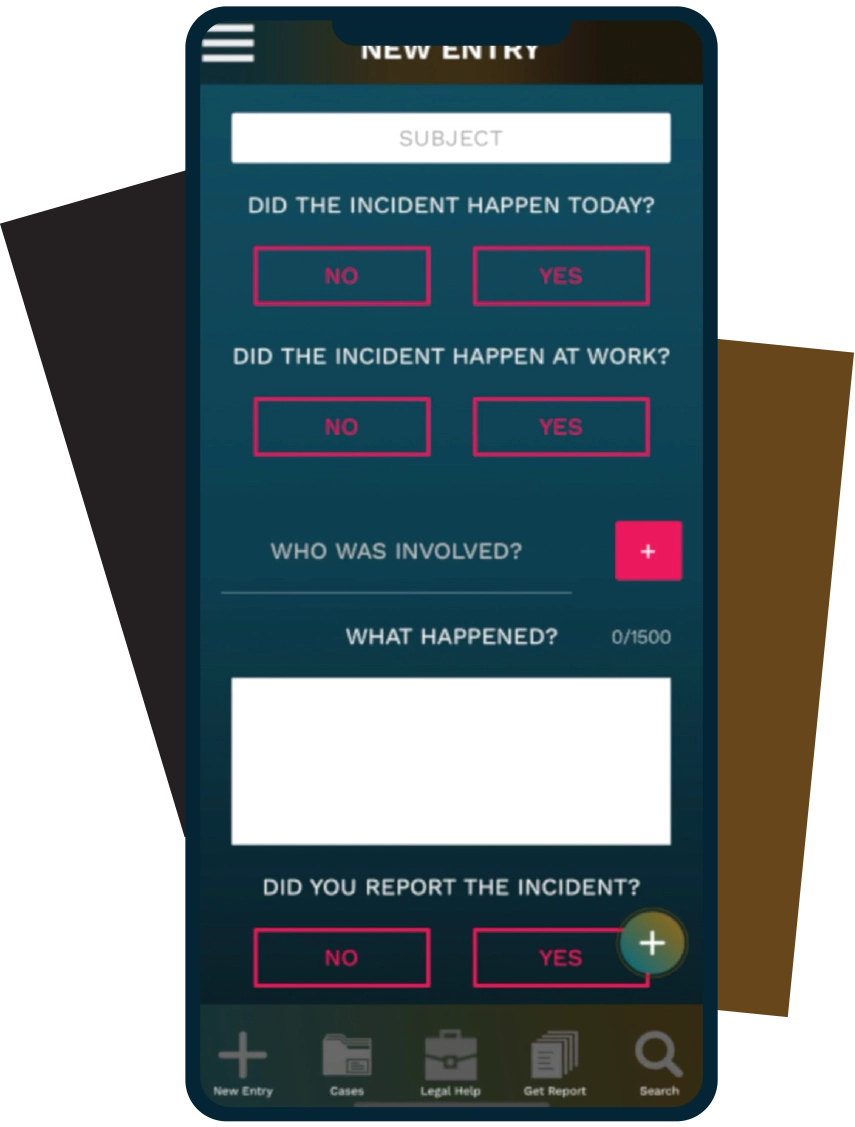
The ToProovIt app was designed to make it easy to document incidents of harassment and also compiles your documentation into comprehensive reports to prove the truth of your claims.
How do I report harassment at work?
Report workplace harassment to your HR department or a designated authority within your organization. Follow your company's established procedures for reporting harassment, and keep records of your complaints.
If that doesn’t resolve the situation, you still have other options. These include filing an official complaint with the appropriate state agency (the Civil Rights Department in California) or the federal Equal Employment Opportunity Commission as well as getting legal help.
Where do I start with getting legal help for workplace harassment?
The first step in getting legal help is to contact an attorney experienced in employment law or workplace harassment cases. They can guide you through the legal process, let you know what to expect, and help you understand your rights and options.
What do I need to have ready when I talk to a lawyer about workplace harassment?
Perhaps the most important thing to have ready for a lawyer is any documentation you have of the incidents you’ve experienced. This includes dates, times, locations, and any evidence you've collected.
In addition to incident documentation, you also should be ready to show a lawyer records of any complaints or reports you may have already made to your employer.
WORKPLACE RETALIATION
What is workplace retaliation?
Workplace retaliation occurs when an employer takes an adverse employment action against an employee in response to the employee engaging in a protected activity.

These “protected activities'' include reporting unlawful behavior or refusing to participate in unlawful behavior at work. Some examples of unlawful behavior that might be reported or refused include sexual harassment, safety violations, drug abuse at work, questions or complaints about unpaid overtime, denied restbreaks, etc.
If your employer knows that you have engaged in a protected activity and then makes you suffer an adverse employment action, then you may have a case for workplace retaliation.
What are some examples of workplace retaliation?
Workplace retaliation can manifest in various ways and there are many different “adverse employment actions” that can qualify as retaliation. Some examples include, but are not limited to:
- Being”punished” either directly or indirectly
- Derogatory nicknames
- Isolation or silent treatment
- Being left out of important meetings
- Being targeted
- Wage or salary deduction
- Being assigned demeaning tasks outside of job scope
- Being singled out with impossible demands
- Being singled out with unreasonable deadlines
- Hours cut
- Position eliminated
- Demotion
- Denied a promotion
- Termination of employment
- Falsely documenting termination
- Hyper-criticism of your work
How do I know if I’m experiencing workplace retaliation?
If you've engaged in a protected activity and then faced adverse employment actions – such as those mentioned above – this is a strong indicator of workplace retaliation taking place.
Trust your instincts and get help. If you feel you're being treated unfairly or retaliated against due to your protected actions, it's essential to explore your options for recourse.
What do I do if I’m experiencing workplace retaliation?
If you believe you're experiencing workplace retaliation, document the incidents, keep records, and consult with your company’s Human Resources department or a supervisor.
It's important to address the issue within your organization. However, you can also seek legal advice to explore all of your options for pursuing justice.
How do I document workplace retaliation?
- Documentation is essential in proving any hostile work environment, including workplace retaliation. You need to keep detailed records of all incidents related to the retaliation.
- Your records should include dates, times, locations, individuals involved, and descriptions of what occurred. Additionally, save emails, memos, photos, or any written evidence.
- The ToProovIt app was designed to make it easy to document incidents of workplace retaliation and also compiles your documentation into comprehensive reports to prove the truth of your claims.
- However you choose to do so, documenting what is happening is vital in building a workplace retaliation case.
How do I report workplace retaliation?
- Start by reporting the retaliation to your HR department or a designated authority within your organization. Follow your company's established procedures for reporting workplace issues.
- If internal channels do not resolve the problem, you may need to consult with an attorney who has experience in employment law and workplace retaliation cases and/or file an official claim with a government agency, such as the EEOC or state agency, like the California Civil Rights Department.
Can I get legal help for workplace retaliation?
You can – and should – seek legal assistance if you believe you have experienced workplace retaliation. Consult with an employment law attorney who has experience with retaliation cases. They can help you understand your rights and guide you through the legal process.
What do I need to have ready when I talk to a lawyer about workplace retaliation?
- Documentation is essential in proving any hostile work environment, including workplace retaliation. You need to keep detailed records of all incidents related to the retaliation.
- Your records should include dates, times, locations, individuals involved, and descriptions of what occurred. Additionally, save emails, memos, photos, or any written evidence.
- The ToProovIt app was designed to make it easy to document incidents of workplace retaliation and also compiles your documentation into comprehensive reports to prove the truth of your claims.
- However you choose to do so, documenting what is happening is vital in building a workplace retaliation case.
WORKPLACE DISCRIMINATION
What qualifies as workplace discrimination?
Workplace discrimination involves treating employees unfairly based on their protected characteristics, such as age, race, gender, disability, or sexual orientation. It can include actions like hiring, firing, promotion, or unequal treatment.

It is disparate treatment due to:
Age (Age Discrimination)
How do I prove that I’m being discriminated against for my sexual orientation?
To prove discrimination based on sexual orientation, you need to document instances of biased treatment, collect witness statements, and keep records of any comments or actions that demonstrate discrimination.
How easy is it to prove age discrimination?
Proving age discrimination can be challenging, but it's possible with documentation, witness statements, and other evidence showing a pattern of discriminatory behavior. Legal advice can be valuable in building a case.
Sexual Orientation
How do I prove that I’m being discriminated against for my sexual orientation?
To prove discrimination based on sexual orientation, you need to document instances of biased treatment, collect witness statements, and keep records of any comments or actions that demonstrate discrimination.
Race/National Origin/Color / Ethnicity
What is racial discrimination in the workplace?
Racial discrimination is when employees are treated unfairly due to their race or ethnicity. It can involve racial slurs, biased hiring practices, promotion denials, or unfair discipline, among other discriminatory actions.
Could I lose my job if I complain about my racist boss?
It is illegal for your employer to retaliate against you for reporting racial discrimination. If you face retaliation, including losing your job, you have legal recourse to protect and enforce your rights.
Disability/Veteran Status
What are examples of veteran discrimination in the workplace?
Veteran discrimination in the workplace can include failing to rehire military personnel, unequal treatment, or creating a hostile work environment for veterans. These actions are prohibited under the Uniformed Services Employment and Reemployment Rights Act (USERRA).
What are examples of failure to reasonably accommodate for a disability?
There are many ways one can experience disability discrimination in the workplace. Failure to accommodate a disability can include not providing reasonably necessary tools and/or not making workplace adjustments for an employee's specific needs, such as assistive technology, modified work hours, or accessible facilities.
How do I get accommodations for my disability?
You should request accommodations for your disability directly to your employer. It's essential to clearly communicate your needs and provide documentation from a healthcare professional to support your request.
Sex/Gender/Gender Identity
What constitutes gender discrimination?
Gender discrimination involves unequal treatment based on a person's sex, gender, or gender identity. This can include unfair hiring, promotion practices, pay disparities, or harassment, among other discriminatory actions.
How do you deal with gender identity discrimination in the workplace?
If you face gender identity discrimination at work, it’s vital that you document the incidents and report them to your employer's HR department. You also may want to seek support from organizations specializing in LGBTQIA+ workplace rights. Additionally, legal assistance may be necessary to deal with this type of workplace discrimination.
Medical conditions (Physical limitations, treating a condition, mental health, health impairments)
Can I be open about my medical conditions in the workplace without being discriminated against? Do I need to tell management?
You have the right to keep your medical conditions private. However, if you require accommodations, you must inform management to receive the support you need. Even if you tell them about your medical conditions, employers are required to keep your medical information confidential.
What are reasonable accommodations?
Reasonable accommodations are adjustments made by employers to allow employees with disabilities to perform their job effectively. This can include modified work schedules, assistive devices, or changes to the workplace environment, among others. In order for the employer to determine if they can provide reasonable accommodations, they should engage in an interactive process with the employee to discuss the need for accommodations.
What if my employer’s accommodations aren’t reasonable?
If you believe the accommodations provided by your employer are not reasonable, discuss the issue with your employer and seek legal advice if necessary. Your rights should be respected, and the employer needs to engage in a good-faith process with you to examine what needs to be done to reasonably accommodate your specific situation.
FMLA Maternity/ Pregnancy
Is it required to provide a place for me to breastfeed?
Under the Fair Labor Standards Act (FLSA), employers are required to provide basic accommodations – including reasonable break time and a private place (other than a bathroom) – for nursing mothers to breastfeed or express breast milk during the first year of their child's life.
Family Status - This is also called family responsibilities discrimination or “FRD”
What is discrimination based on family status?
Discrimination based on family status is when a person is treated less favorably because of their family responsibilities than someone who has none. This can also include a company banning the hiring of spouses working at the same company, even if they’d have no interaction at work.
WHAT TO DO IF YOU’RE IN A HOSTILE WORK ENVIRONMENT
What To Do In A Hostile Work Environment?
If you find yourself working in a hostile work environment, your options are various and complex. We'll help you make sense of them.

How To Tell If My Workplace has engaged in unlawful conduct?
Unlawful conduct in the workplace may include harassment, discrimination, retaliation, or other violations of employment laws. Signs may include repeated inappropriate behavior, unequal treatment, or hostile work conditions based on protected characteristics.
If you suspect but are unsure if unlawful conduct has occurred, trust your instincts and take action to protect yourself. Don’t hesitate to seek legal advice.
What do I do if I’m in a hostile work environment/ suffer discrimination?
If you believe you’re experiencing a hostile work environment or discrimination, talk to an attorney immediately for specific direction based on your circumstances.
Here are some additional steps to take:
- Document incidents and gather evidence.
- Consult your company's policies on reporting such issues.
- Consider discussing your concerns with HR or a supervisor.
- Seek additional legal advice if the issue persists or escalates.
What do I need to have ready when I talk to a lawyer about a hostile work environment?
A lawyer will need to see all relevant documentation of the hostile work environment. This includes incident records, emails, text messages, and any other evidence you’ve documented.
Be ready to discuss your experiences and how they've affected you personally and professionally.
How do I gather evidence?
The best way to gather evidence is to document, document, document, document as much as possible.
For example, document all incidents promptly, including dates, times, locations, descriptions of what happened, and witness statements if possible. Save relevant emails, text messages, photos, and any other written communication. If there is any physical evidence – such as offensive materials – collect and save it as well.
The ToProovIt app was designed to make it easy to document evidence of a hostile work environment.

Download the App.

Document as it happens.

Get timestamped reports with the click of a button.
Should I file a complaint with HR for a hostile work environment?
Filing a complaint with HR is a common first step. However, consider seeking legal advice beforehand to ensure you protect your rights and follow the correct procedures. HR's response may vary, so legal guidance is crucial.
Should I keep my hostile work environment complaints to myself or should I communicate with coworkers?
While you can confide in coworkers for support, be cautious about discussing the situation too broadly. Use discretion, as openly talking about HR matters like complaints can sometimes lead to unwanted consequences.
That being said, you should not keep your complaints to yourself. You have every right to seek resolution. However, It's often best to focus on appropriate confidential channels, such as HR or a lawyer, to resolve the situation.



Prove your case with the ToProovit App

Workplace Harassment

Workplace Discrimination

Workplace Retaliation
Helping others ToProovIt
Workplace Harassment Cases Reported
Workplace Discrimination Cases Reported
Workplace RetaliationCases Reported
How it Works
- Document every incident (big or small) in the app.
- Add photos whenever possible.
- The app timestamps your entry and stores it securely in the cloud - automatically.
Created by an actual attorney: Steven E. Alfieris